Showing posts with label community. Show all posts

Friday, April 01, 2022

Bak 2 Skule - It's Been a While


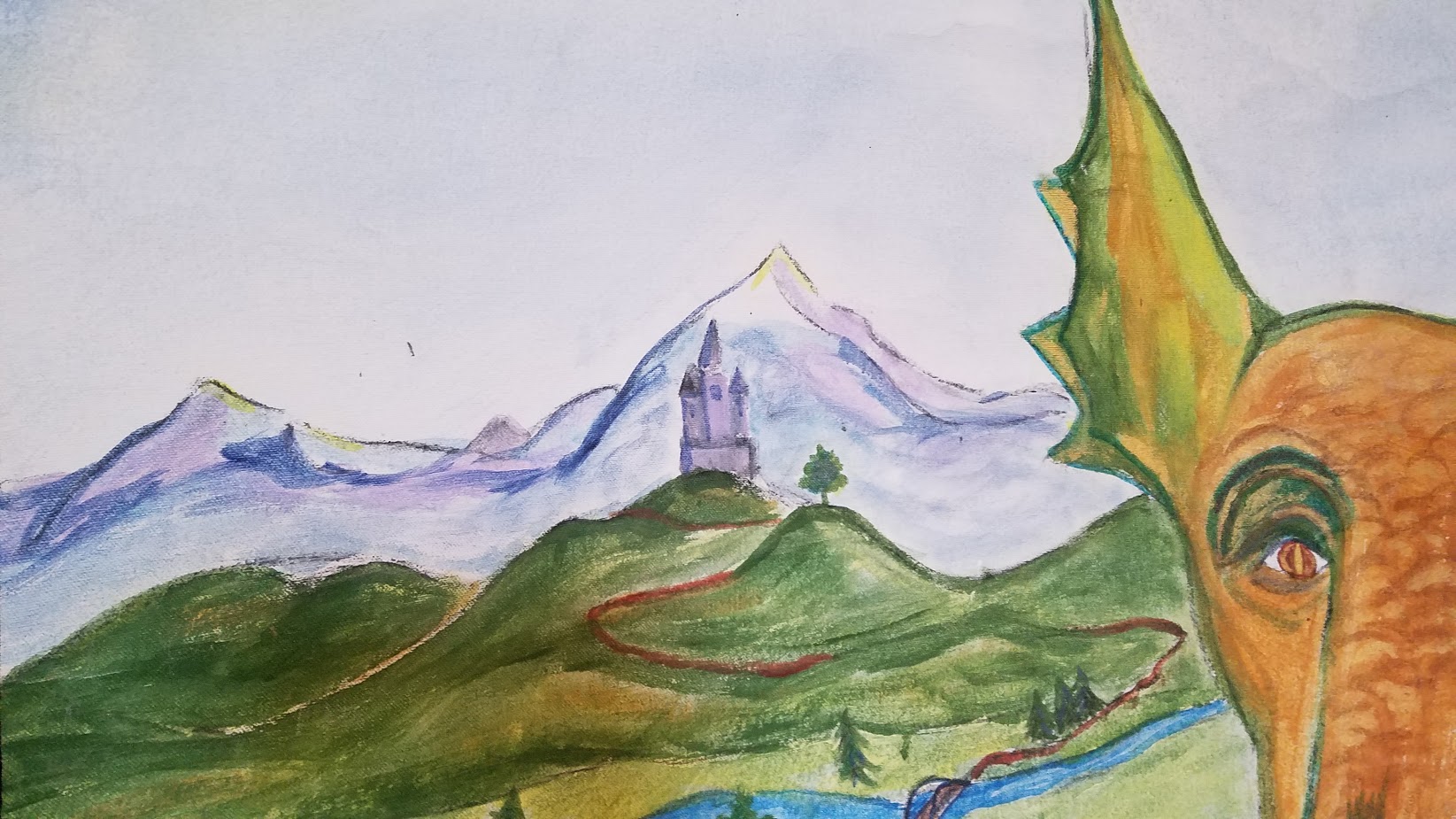
Dragon Backdrop
 

I had no idea!

  I had no idea how much I had missed it (well, I really did, but...)

     I had no idea how much fun it would be to see young people get excited about stories after two years of not being in a school.

       I had no idea how out of shape I have become!

This last week I had two school gigs. And it was brilliant. Both were very different, but both were in-school, in-person and very much live. The organizers, librarians, and teachers were wonderful, and seemed so happy to have in-person events going on. The kids, very much the same!

Curious looks and glances were made by children as I made my way through the halls with my gear. "Hallos" were called out, along with the Big Question: "Who are you, and what are you going to be doing here?" So many crazy thoughts went through my mind in answer to that: special agent, location scout for a film, building inspector, but I just said: "I'm going to be seeing you later, to tell stories to your grade!" Eyes wide! That put a bigger smile on my face!

Tuesday was a big rush of a day. I packed a banana for lunch and an apple for the ride home. It was going to be a half-day visit. Three presentations for second and third graders, then kindergarten and first graders, ending with the fourth and fifth graders. Then a workshop for the latter group - invitation only!

I had my stories polished and planned, the PA set-up in the cafeteria, my drum warmed up! But then the kids came in, we started chatting and things changed. I shared some personal narratives about being a kid, long, long ago, before moving into the folk and fairy stories. I talked about the importance of reading, and playing, and spending as little time as they possibly could on t.v. and devices, and that music was also really cool without the videos and think about playing an instrument. Music is a language spoken all over the world. The principal popped in and out, other teachers who were not looking after the young folks listening came and went.

We laughed a lot. As did the teachers. I told some more thoughtful stories which provoked smiles. One group left and another shuffled in. I grabbed water, looked at my notes, and played the penny whistle. I played the same tune three times, but each time it was a different song. Twinkle, Twinkle, Little Star, followed by the ABC song kids learn, and then Ba-ba Black Sheep. I do not profess to be an accomplished penny whistle player, but the kids and teachers liked it, groaned and rolled their eyes when I started the third song. They waved good-bye and the older kids, the nine and ten year olds came in. Another sip of water, and banter. "Ah, here we have the Big Kids!" They strutted a little taller before sitting down on the cafeteria floor. I showed them a map I had painted of Scandinavia and asked if they knew what was where, and a couple did. I then began a story from Finland. The kids were great. So many smiling faces, so much chatter at the end, talking about the stories, their favourite parts, the wonder of it all.

It was then time to rush into the library and get set up for the workshop. We didn't have much time, but I was able to cram a bunch of stuff in, and have some of the students tell their stories, give them different kinds of feedback, before they had to go. The kids were amazing, as they had chosen to work through their lunch break. Their attention wandered at times, as did mine - we had all been at it for a while, but we got quickly back on track. One young lady who really didn't want to share her story, ended up volunteering to tell her tale! And it was good. There's something so empowering for kids to be actively listened to, to share their own stories, and be heard by their peers and teachers.

I left on a high from that morning.

Tuesday night I had another gig but it was a virtual presentation with TBD Storytellers for grown-ups. A fun night with some great stories, but a late night. The next day was prep for Thursday. Thursday was only two presentations, and no workshop. This school was very different from the previous school on Tuesday. A much larger school. Their policies were slightly different in that the classes, if we were to present inside, would not all be allowed to be together, and that one group would be in the library with me, the other classes would watch through streaming live. It was cold and windy and the report said there would be rain, so we moved into the library. A laptop was set up in front of me, I stuck the map up on the white board along with a photograph of a cave in England's Lake District (it's where a dragon used to live) and I began.

Again watching and listening to the kids, this time fifth and six graders, was wonderful. The story of the cave has a dragon in it. At first it is only a voice, the kids don't know who it is in the cave speaking to the kid in the story. But when it comes out that it's a dragon, there's a rush of quick conversation on what they thought it was. And the look on their faces at it being a dragon was so heart warming.

I say that the kids have similar challenges in both schools, but there were differences. When we talked about sweaty palms (one character was very nervous), I asked who had felt that way, and had anyone ever been the principal’s office. Eighty percent of the kids raised their hands! We talked about devices, writing, stories, books. The laptop was treated as a person in the audience. I got close, very close to the camera lens, I made faces for the camera as much as I did for the audience and I asked teachers to put forward questions in the chat feature. It seemed to work; a teacher came out afterwards to tell me the kids were engaged! This is the first time I have got immediate and unsolicited feedback about virtual work. After two years, it seems I have it.

We talked about all sorts of things related to the stories I told, and it was wonderful. Again the kids left chatting about what had happened and the tales told. Teachers talked about the way the kids were not used to having to sit for so long and pay attention (class periods are not sixty minutes long), and how much joy they exhibited - some kids who had not done so since March of 2020. It was great to hear. And I hear similar things from other storytellers - the joy stories bring, the connection stories create with the kids, the peering over the walls some teachers have slowly built up since the beginning of the pandemic.

One thing I did discover today, Friday morning, was that I am Exhausted! Before the pandemic I was doing this sort of work all the time, in and out of schools, dashing around the countryside, presenting, working with teachers, but since March 2020, not so much. So I now need to get this Dad-bod into shape so when I next go out (in a few days) I won't be quite as tired at the end of the day!

Do you feel like too?

Peace,
Simon

Saturday, September 16, 2017

REPOST - Understanding History and what it means to be British!


I originally posted this a few years ago, but as an immigrant, I wanted to share, again, what I feel being a privileged white male European living in the USA.

From (slightly edited):

Wednesday, January 02, 2013

Before the holidays took off I began a quest to find more Holiday stories from cultures other than my own.  I mulled over stories from faiths other than Christian.  I was raised with Grandparents who were mostly Christian Scientists, but in late Elementary School years attended Church of England for a while.  In my teens I explored other religions and faiths and I have kept reading about different cultures and their beliefs since then.  I have also been lucky enough to have known people whose faith has been tested beyond 'normal' circumstances and have retained their faith, or had it made all the stronger.  Religion can be a bit of a sticky wicket.  Some people proclaim their faith is the only right one and all others are corrupt, or heathen beliefs.  I once shared a flat in London with a born-again Baptist. He was told me the Catholics had it wrong and would burn in hell for what they thought was right. That was his belief.  The truth is that until we die, none of us will really know - have the solid  fact before us (a fire pit beneath our feet, wings on our backs, or fighting in Valhalla with other great warriors) - if there is indeed anything after death other than nothing!  Reading old myths, legends and folk stories I have seen many religious (and other) bigotries appear, sometimes because of who was transposing, or translating the story, or because of the 'norms' of the day - what was acceptable then and not now.

Being British has some drawbacks.  Hard to imagine, but it is true!  The biggest for me is that as a Nation, Britain colonized the world.  The sun never set on Britain at one time in history.  It was a while back and I should move on, but that history comes with a lot of baggage and for me a heightened awareness of what Britannia did - England even.  England ripped apart Scotland. England caused major problems in Ireland which began over 350 years ago and are not 'fixed'.  Britain did serious damage on the African continent, and in India, and what we did to the indigenous people of America was appalling. I know other countries did similar things, but.  With all of this came exploitation, and... and the suppression of indigenous beliefs.

So when I come to tell tales from other cultures I carry that sack on my back. Especially around the Winter Holidays.  We could begin the winter Holidays with the Eid Al Adha on the 14th and 15th of October and run until the Chinese New Year which [was in 2013] the Year of the Snake and is celebrated on the 10th and 11th of February. Somewhere I wanted to find some great stories I could be faithful to and tell from deep inside. And not be too down - I was going to be performing for kids as well as grown ups.  I looked at some Jewish tales, mainly the story of Hanukkah and the folklore of the driedel.  But I did not feel right telling this story as a non-Jew. Then I remembered a wonderful story written by Eric Kimmel called  Zigazak!: A Magical Hanukkah Night. Because this is an original story I could not, with good conscience, tell it without Eric's permission. So I emailed him via his website and he said: YES.  A friend of mine Tim Van Egmond told me (and others) about a Japanese story. And I had my own stories to draw from.  So over the Holiday period, I was able to tell a story about a couple of Hanukkah goblins (thanks so much Eric), the story of King Wenceslaus from Bohemia (now in the Czech Republic), a Japanese story about New Year and why the seas are filled with salt (thanks Tim), the Winter Cherries (a great Welsh tale set in the Arthurian 'romances' pantheon), and a true story about the truce the soldiers created on the Western Front of World War I, 1914.  (Over the holidays I found another true story about a German pilot who escorted a British bomber to safety!)  It was a nice mix of tales and religions and all of them contained the best part of humankind - our humanity!  Every story I read and told contained our humanity, our ability to make the right things happen, to help others. And every story has it's own little miracle in it.


Oh we ain't got a barrel of money
Maybe we're ragged and funny
But we'll travel along singin' our song side by side

Don't know what's comin' tomorrow
Maybe it's trouble and sorrow
But we'll travel the road sharin' our load side by side

Back to now - 16th September, 2017

When I first came to the States I had to stand in a line with other men on either side of me with my drawers down, along with the rest as a doctor took hold of certain parts and asked each and every one of us to cough. On arriving in U.S. with all the right permits I was questioned about why I was here and what I planned on doing. My answer to marry my American fiancee. Once in America it wasn't over. We had to be married within three months. It wasn't over. We were interviewed together six months later. And a year later. I was given a 'green card' (which was pink and when I asked if boys didn't get blue ones, I realized I should keep my mouth shut) which was to be renewed in five years. Even with nothing to hide, and with all the right papers filled out in advance, it was intimidating.

In Portland, Oregon where my wife and I moved to live, getting in line at the immigration building to be interviewed to stay in the country and renew the visa I was very much in the minority being white. I saw all sorts of people with all sorts of problems. Some of these people were rude and obnoxious to the officers, even when it was the person at fault, so it is not surprising the immigration people were not always happy. It was not surprising that some of the immigrants were pissed off. It was not easy to find the right information, and even when you arrived at 5.30 AM to get close to the front of the line when the doors opened at 8 am (or was it nine?) to find you still needed other info, it was frustrating. Sometimes these folks were very polite despite all this and the officers were rude, for sme unknown reason. Should you talk out, and stand up and defend these folks? What if when it was your turn they refused you admission? Once you left the line, you wouldn't get back in until the next day. The officers I dealt with were sometimes great, and sometimes not so much. As an English speaking, white male I think I was sometimes treated better than others, and saw and heard some pretty poor human relations. No one wants to be in those lines, in those rooms, waiting to see if you could remain here. I chose to come over to America. For those who did not choose, but were brought, I cannot even imagine what the experience would be like for them - young people who have really only known America as their home, brought here by their parents.

I have been here in America for over 20 years and still carry a 'green card' which is now green again! I cannot imagine what it must be like for people trying to move to America now, after the Twin Towers came down, after the hatred that seems to be rife here now. Or for those who are trying to stay. It took me two months to find a job. My skills included 5 years of management experience, and hospitality, I had been a professional photographer - self employed, and ended up at first as a barista in a coffee shop - it was Portland, Oregon! I speak the same language, sort of. There are people coming over here with better skill sets than I had or have, more qualifications who are working the same sort of jobs - coffee shops, cleaners, menial work, if you will as I had when I first arrived. For someone of colour coming here, someone of an obvious different faith than Christian, I can see these folks having a much harder time finding work and settling.

With the garbage I carry of Britain's past colonization, I have the utmost empathy for newer immigrants coming to these shores who welcome "your tired, your poor,
Your huddled masses yearning to breathe free,
The wretched refuse of your teeming shore.
Send these, the homeless, tempest-tossed to me,
I lift my lamp beside the golden door!”

I hope America can stand by these welcoming words, and remember that everyone who is not a Native American is an immigrant or descended from immigrants, who might have arrived homeless, wretched, tired and poor. Have empathy. When the Italians came over they were treated like dirt. When the Irish came over, the same thing. The Polish people, the folks from the Ukraine, each 'last' wave of immigrants begin at the bottom, with a sort of cultural hazing, intentional or otherwise.  I hope we can offer all people entering the United States of America the little miracles I find in the stories I tell. The stories I tell from all over this wonderful and crazy work we live in.

Monday, March 17, 2014

Recording (Family) Stories

If you have young children, read on.  If you have grandchildren, read on. If you have elders in your family, read on.

We all come from different cultures and each and everyone of us has different life experiences. These experiences, and our heritage, I believe, make us who we are.  These experiences can be told in stories, and the stories from our own culture and heritage can be, and should be told. As our planet, Earth, gets smaller and as we travel further a field to live the life we want to, we sometimes find ourselves leaving family behind and the stories they have within them.
Photo by Simon Brooks, 2014
Showing: Disney's Babes in Toyland LP, a compact disc, an Agfa cassette tape,
the Olympus WS-300M, the Zoom Q3 and Roland's Edirol R-09HR

I was not able to record many stories from my Gran before she died, just a little bit here and there, although I knew a great deal about my Grandad - he also came to America and Canada.  My grandparents on my father's side, sadly passed away before I could get any family stories from them, and it wasn't until after their death I found that I had Irish in me. My Mum, however, shared some great stories of her life growing up, when I last saw Gran, two years ago.  I found out about her jaunts to the jazz clubs of Birmingham and her wild and crazy friend. Her sneaking off to date with boys! I got some of these stories on tape. (To be used later...!)

As a kid, my brother and I recorded on my step-father's Grundig reel to reel machine, and occasionally on the Dictaphones my dad sold from his office supply store in South Wales (before Office Max was invented).  I wonder where those tapes are now, and if they still have a couple of little boys pretending to be police officers or spies on them! I later used that same Grundig to record my rock and band. I moved 'up' to a cassette machine, a Walkman and then an Olympus voice recorder. I have always loved recording sounds, stories, other people!

As Gran grew sick I realized how much I did NOT know about her.  She came from Canada originally, told me we were someway related to Cecil Rhodes, but I can't see how! She lost her brother, James, at a fairly young age. Gran and my Aunt (great aunt really) Andree sold their burial plots because they were worth some money and planned on being cremated! Our family has been Quakers and Christian Scientists. I tried to get over to the UK and record some of her stories but she was reluctant to talk into the recorder.  I wish I had done more many, many years ago.

These days, it is easy to record at very high quality for not too much money. With the ease of getting digital recorders we do not need tapes anymore, we only need free computer space, and we can get more of that with memory sticks, or external drives! For the cost of taking the family out for a meal or two at a restaurant, you can get voice recorders which record nicely. My grandfather was recorded on cassette, but there is a lot of hiss on it, as it was from one of those Jones cassette machines you see libraries giving away!

Now to bring this into a full circle!  I whole-heartedly suggest that you invest in a good voice recorder. Go to a store, take a good pair of headphones and try a few out. Why? The headphones will allow you to hear the sound quality, which you might not otherwise hear in the store.  Buy one and record stories for your children and grandchildren. If you have elders in your family, ask them to share some of their memories with you. Record your own stories! When your kids grow up, and have their own children, they might want to hear stories you might forget! When people pass away, so do their stories, their life experiences and the stories they knew and loved. If your elders are young enough, then they can record those stories and send them to you. Keep them.  Even though young kids might not appreciate the stories now, when they get older and get interested, you will have them.  If your family moved from another country be it England or Ireland, Egypt or South Africa, India or Serbia you might have family still there, embedded in your heritage.  Have them share those stories with your children, or share with other people's children within your community. You might have a rich source of stories that others do not.  Share this source, your heritage, your stories.

Books are great, they can contain so much information, but voices of your own family or of those close to you contain so much more - their own lives and experiences.

(I am doing a workshop on recording stories using voice recorders, computers, microphones and Digital Audio Workstations - DAWs - at Sharing the Fire, the North Eastern Storytelling Conference on Friday, 28th March at UMASS, Amhurst MA. For more details visit the website of the League for the Advancement of New England Storytelling: http://lanes.org/storytelling-conference/friday-pre-conference-intensives/)

Sunday, August 18, 2013

Branding! A story of who we are?

A recent discussion occurred on the Storytellers Facebook page.  It seems may people have different reactions to 'branding'.  My colleague Karen Chace (a professional storyteller and researcher whom I have a huge amount of respect for) and I created a workshop on branding called: "Branding, It Doesn't Have to Hurt!"  Some people do not like the word brand and I can identify with that! Was that pun intentional?

I think what most people don't realize is that everything has a 'brand' of some kind.  Even some people have a 'brand' - who do you know is known for whacky socks, or strange hats, or braces/suspenders, or tie dye shirts, or wears the same type of clothes all the time (other than Tomm Wolf)? That can all be a form of branding.  Even the glasses some of us wear! And brands change over time.  A lot of change has to do with perception, fashion, management, needs, or personal choice!

However, branding usually tells people who we are as a business, product, or organization.  It's about our image, what we do, and how we present ourselves and act in the world.  A brand can incorporate our ethics and sometimes brands change because of our business.  WorldCom (who began as LDDS for Long Distance Discount Services) were a fabulous company that bought MCI and became MCI WorldCom.  The MCI was dropped and the company reverted to WorldCom, but kept the MCI star, although reversed in direction. Certain accounting practices pretty much destroyed the company, which then went back to MCI, trying to hide the WorldCom negative past history, and is now owned by  Verizon! WorldCom crashed from being a major contender rivaling AT&T, almost overnight.


You can look at Jason Mraz and know him by his now almost iconic pork pie hats.  We know Nike by the 'swoosh', and Coke by it's swish!  Although Starbucks has changed its logo over the years, we still recognize it, from the brown, twin-tailed siren, to pretty much just her face and hair (the twin tails looking like something she is holding, almost off camera, as it were) - now in green.  We can see these 'things' and know what they are and where they come from.  There is an app available where you can guess the company from the brand or logo image! Go and try it out.  It's free!

Be aware, though, that Brand and Logo are not the same thing.  A logo is part of the brand.  The brand, as I see it, is the overall image a company, product or person (small business) has. The logo is part of that.  Other things make up a brand: type face, colour schemes, design styles, sometimes a brand includes 'the copy line' or 'by-line', the mission statement or organizations culture etc..  Take for example: "Just Do It" or "Lovin' It"!  Yeah, I know! But all those things come together to make a 'brand'.  My CDs have their own separate 'brand' with the circle image and type face: the style they have.

Originally, my letterhead, which was part of my brand, was a watercolour picture I had painted.  I moved from performing primarily at libraries for kids and families, to also working in colleges and for adult audiences and with businesses; I had to change my letterhead to reflect that additional business focus.


So the watercolour was dropped and I adopted a more serious black panel with my name in white letters (see top).  This is now used across all my stationary, and is part of my 'brand'. Another part of my 'brand' is what I have with me when I show up to perform or teach, whether at a school, college or business - my apple crate!  This became 'part of me' (the storyteller), and fits the 'storytelling image' I have in my mind.  It began as a simple way to cart all my gear around and have something to put my glasses and other 'bits' on:- a small table and carrying tool.  It carries everything I need, so I do not have to bother my host with requests for this and that. My bodhrán and backdrop are also part of my 'brand'! In some ways, I suppose even the little notebook/journal I always have - seen in the picture here - is also part of my 'brand'.  One of my patrons said they loved the apple crate as it felt like I was bringing part of my home with me!

When we look at these things across the board of our business or organization, we might see that we already have a brand without knowing it.  Some storytellers are known for the shoes they wear, or the way they paint their nails, a certain shawl, shirt, or hat they always wear when telling tales, or are known for their harp.  That is all part of their brand, knowingly or otherwise. Karen Chace is known and uses her ladybird (ladybug).

You could say that your brand is your schtick!  Your brand is YOU!  A brand, your brand is telling people the story of who you are, and what you do, and sometimes how you do it!

Some people don't like the word 'brand'. It comes from the tag, or logo, used for identifying livestock, usually burned or painted onto the skin, hair or fleece of the creature.  Some people feel that companies use their brand to present a false image, but those false images are usually found out and uncovered. Some companies use brand to sell things by brainwashing people, but we can only blame ourselves for letting that happen.

Neither the watercolour or the 'name black banner' are or were my my logo,
but are part of my brand! You might recognize my logo, however - it goes everywhere with me!
Taliesin
And that word - Brand!
Is there another word we could use?
Moniker? Not really, a moniker is a nick name.
Identifier? Maybe! The Collins Dictionary describes
an identifier as: "a person or thing that establishes the identity of someone or something." It's a bunch of 'things' which make up a brand!

So take a look at yourself and what you do, look at what others think you do, and see if you have a brand or identifier! And, if you need or want some help, the workshop Karen and I created can help you focus or fine tune your public and/or professional persona.  Contact us!  We are just a click away!

Tuesday, July 30, 2013

Growing Stories

A friend of mine, Marek Bennett, who is an artist, musician and teacher, wrote a blog about his forthcoming graphic (comic) travelog of his visit to Slovakia.  It gave me pause for thought about stories and how they grow. In his blog, Marek likens his book like transplanting cabbage! Read it, it is interesting.

In the vein of nothing now is truly original, and with Marek's permission, his blog inspired me to think about stories in a similar way.  Personal stories more so, because they are, well - personal.  Something happens to us, we see or hear something and a seed is planted inside us - the seed of a story.  If we ignore it, it will die and be lost.  Some stories we want to lose and forget, but sometimes those are the stories we should keep, nurture and try to explore and find meaning in.  Sometimes our hardest work is our most valuable.

So here are my thoughts on stories beginning as seeds:

1/. Choose a seed

Heirloom seeds could be considered our family stories, or historical stories.  But there are also our personal stories as mentioned above like those heard on The Moth, traditional folk and faerie stories, myths, legends, sacred stories, the list can go on forever.

2/. Seeds need to be planted in fertile soil
Our minds need to hold these stories, collect them, and store them, recall them.  We need to be creative for the stories to become strong.  We need imagination.  We need to be able to place ourselves IN the story to feel and see, hear and touch those things in the story

3/. Seeds need the right nutrients to grow
For a story to grow (and by that I do not mean add lies for embellishment) you need to work on it. Going back to school, you need to make sure that you have all the who's, what's, why's, where's, when's which's and the how's! Without these the listener might get lost, find the story confusing, not understand what is happening.  The who, what, why, when, when, which and how are the nutrients of the story and without these the story will become stilted, awkward or stunted.  Sue Black has a great resource for these nutrients on her website (which has a number of other teacher resources).

4/. Keep the seedlings indoors until chance of frost has gone
Stories can trick you and trip you, and likewise if a story is brought outdoors before it is strong enough, you could damage or kill the story.  Tell the stories; at first to yourself, to a voice recorder, a pet, a stuffy, the mirror, on a car ride!  This is keeping those seedlings safe until they have grown stronger. Then tell to a practice audience to get the real feeling of the story.  This is like bringing the plants out during the day, but back in at night.  In Laura Packer's recent blog "Eight Things I Learned From the Kansas City Fringe Festival" she says of working with a practice audience: "Because I am a storyteller and not confined to a word-for-word script, the story shifted each time. I loved hearing how some bits rose to the surface and others fell away as I danced with the audience." Personally I like to find those bits that rise in case this indicates something else I need to bring to the story, and not be surprised, although that is fun too, and how stories grow!

5/. Once frost has passed, plant outside in a steady light
Many traditional cultures say that stories are living things - something I strongly believe - and that they only live, or become alive, when told.  If you have never told a story and been In The Story you are telling, then try it.  Not reciting a story, but telling it. When you do, you will understand what I mean by stories are living things.  By now the story you have been growing and nurturing is strong enough to go outside and into the light of day.  Telling the story truly gives the story strength to grow more.  It's roots will go down deeper, the shoots will become thicker and longer, the flowers more radiant.

6/. It doesn't hurt to learn more about your plant as it grows
Long after I have been telling a tale, I have uncovered older versions, or variants, and by reading, listening or looking over these I might find things that were missing - maybe there was another who, what, why, when, when, which or how that I was unaware of and has been brought to light.  I can choose to add that nutrient to the story, or make the decision that the story is strong enough and the right shape and form, and has the right type and number of flowers for me to make it without those extra bits.

7/. Take care of your plant and: Enjoy!

The story has become itself. It has grown from a small seed, and you have nurtured it, but it is it's own being - I believe - and it will continue to grow and change.  It will stay strong if you keep telling it, and will grow weak if you leave it alone with no nourishment at all.  Just like a plant the story will need watering, take it out and tell it once in a while as you learn new stories.  You will never forget it; the story will not die if you have tended it well and look after it well.  And over time your mind will contain a beautiful garden filled with tales and stories to share.  Some will be family stories, some will be personal stories, and some will be the folk and faerie tales we all love so well.

To hear some of my stories, visit my website and go to Free Stuff! And if you are looking for other resources on my website you can find them at: Resources and in the Teacher's Room.

Marek's book is called Slovakia, Fall in the Heart of Europe and you can read some of it and see it's growth on one if his many working websites: http://marekslovakia.wordpress.com

Thursday, January 17, 2013

A Forgotten Community

Back in 1998 I wrote a piece called a "Dialogue on a Forgotten Community."  I tried re-writing it a while back from memory, but did not do a good job.  I thought it lost forever, but yesterday, whilst playing with the kids and talking about stories, I found it!  Here it is. I hope you enjoy it.


A Dialogue on a Forgotten Community.
A community, as defined by the American College Dictionary, is a "social group of any size whose members reside in a specific locality." In this day and age we talk about the "global community", and although my reflection is not global, it is neither limited to local. I will be reflecting on a mobile community; a community I feel that is not always recognized as such and one that rarely involves itself in dialogue. This community is an aggressive and sometimes, violent community that would rather kill itself than communicate in a responsible fashion, often resorting to mindless, thoughtless, selfish and dangerous behavior. It is a rare occasion when a collaborative flow of meaningful dialogue occurs, and an exploration for truth happens.
On the road, copyright Simon Brooks, 2012
Each morning we rise and breakfast and make statements to ourselves about bettering our lot in life, about how we can improve ourselves as human beings and what we should be doing (even if we do not) to help the planet and fellow human beings. Then we get into our cars or trucks. The engine fires up, the coffee maybe in the mug holder and the radio is turned on. Here the conversations begin on the Community of the Road. This was the thought that came to me as I drove home from class, pondering on the reflections we had discussed.
Like much of life, we get some early instruction and head out on our own, making it up as we go, learning from mistakes and, therefore, experience. There are guides that we are given to read on how to use the Community of the Road, but it seems that we forget most of ft only after a few years. Our conversations begin with flashing lights at other vehicles that are in our way, we lean on our horns and yell at people and if all else fails we cut them up, if we can, at a later point. None of these techniques are in the instruction book other than as a list of things not-to-do.
I think that some of the problem is that within the cocoons of our vehicles we believe we are invincible and it would be inconceivable that we would be in the wrong, but we are. By opening a dialogue with our fellow community members we would find that life could be so much less stressful and more enjoyable. When folks need to merge onto freeways we can merge by allowing those entering the freeway to join us. Being one car behind will not kill us and it may even make us feel good helping someone else on their way. We are all going to the same place, further down the road. Vehicles have their own language that we, as the drivers, add to. By opening dialogue, using our indicators (or blinkers), we are letting people know where we want to go. There are no surprises if we communicate with our fellow travelers, no assumptions. When we know the person in front is taking a left, we know they are going to slow down and we can allow for that, but when someone slows down without letting us know why, we become frustrated. We see such actions as arrogance or stupidity and if you are like me, you will find stupidity intolerable. Just by waving people on, breaking early, making sure that your lights are working and blinking only when you want them to blink, displaying self mastery, we can create a better community using dialogue. Indicators are so easy to use and make life so much simpler.

 It is only laziness and greed that prevent us from being more courteous. Lazy, because we cannot be bothered to use the tools given to us to create a dialogue. Greedy, because we want to own the roads, or have them to ourselves. We cannot expect others to do what we ourselves do not. By mastering our own actions and reactions, we can show others how much better life can be in our Community of the Road. Lead by example. If people are let in when the traffic is heavy, they may start to do the same, creating a shared vision, one that would become stronger and more prolific. If more people were to use dialogue and not aggression to travel within the community, slowly our mental models would change, causing a chain reaction, albeit slow, around us. We could make better decisions, effecting our immediate environment, creating a balanced alignment within the community. If this is something we want, by setting examples, it can be made to happen. As a result, our community would become a pleasant and much safer place. By becoming a group, working as a team, we can strive for that same goal. Watching teams play in individualistic ways is not as satisfying as watching a team play. The soccer match between England and Argentina is a good example of that. England had some world class players performing really well as individuals, but Argentina, playing as a team, performed better and won (although on penalty goals). Had England used their individual skills as a team they may have won. By opening a dialogue of where we are going, and how we want to get there, we create awareness about us, allowing us to focus on reaching our goals in an efficient and conscientious way.

By using the dialogue available to vehicles, we can eliminate assumptions and disturbance; we can become aware of the necessities of our fellow community members, use energy in a more efficient manner and reach our goals in a safer and friendlier manner.
The writer at the time of writing!
Text copyright Simon Brooks, 2012.  Do not copy, duplicate, replicate in any manner or form.